During Clay's presentation, he also talked about hard work. Through his own personal story, he told us about his own experience about overcoming obstacles. After being shot, he was put in a wheelchair and told by various doctors that he would never walk again. He searched until he found a doctor that would tell him that there was hope for him to walk again. One of the main points Clay made during his presentation was that if people tell you that you can't do something, it is all the more reason to show them you can.
Sunday, February 23, 2014
Wise Words
This past week, our class was give the opportunity to hear the story of a Navy SEAL from a Navy SEAL himself. He began by telling his story. Beginning with where he came from to where he is now, he had many different stories about his journey. One story that stuck out for me was the story about a young girl. It was a very sad story, and even more sad to hear that Clay, the Navy SEAL, still sees her and feels her presence although this occurred many years ago. He explained his story so well, that there was somewhat of a somber mood across the room. It was truly amazing to hear his story and how he has overcome everything he has been through.
During Clay's presentation, he also talked about hard work. Through his own personal story, he told us about his own experience about overcoming obstacles. After being shot, he was put in a wheelchair and told by various doctors that he would never walk again. He searched until he found a doctor that would tell him that there was hope for him to walk again. One of the main points Clay made during his presentation was that if people tell you that you can't do something, it is all the more reason to show them you can.
Sunday, February 16, 2014
Ceremony Reflection
As we have continued to analyze and discuss Ceremony, things that may have not been noticed before have become evident. Many times while reading this book, it is difficult to understand due to the stream of consciousness style of writing. Therefore, it becomes much easier to understand when discussing the book with others. Along with this, another benefit of discussing the book is being able to ask questions to be able to understand things that may not make sense. Discussing the book is the best way to gain a better understanding.
While continuing to analyze the book Ceremony, there were many parts of the book that have stood out and that have become evident thanks to discussions. "He crawled deeper into the tamaric bushes and pulled his knees up to his belly. He looked up at the stars, through the top branches of the willows" (Silko 104). Before discussing the book, this was one thing that I did not notice. The stars in this quote show how big, yet small that Tayo feels as well as a sense of hope. "'You don't have to understand what is happening. But remember this day. You will recognize it later. you are a part of it now'" (Silko 92). Although difficult to understand, this quote really stood out when reading the book. Also, while discussing the book as a class, we found important moments of being. A moment of being is a vivid memory. "He remembered when his mother died. It had been dry then too. The day they buried her the wind blew gusts of sand past the house and rattled the loose tin on the roof. He never forgot that sound and the sand, stinging his face at the graveyard while he stood close to Josiah. He kept his head down, staring at small round pebbles uncovered by the wind. Josiah held his hand as they walked away from the graveyard. He lifted him into the front seat of the truck and gave him a candy cane left over from Christmas. He told him not to cry any more" (Silko 86). This quote not only shows a moment of being, but also that Josiah is always there for Tayo and is a source of hope for Tayo.
Monday, February 10, 2014
Ceremony
Just about each and every page of Ceremony has a part that can be analyzed. Last week, we spent time analyzing the parts of the book that we have read so far. While analyzing it was very interesting to see how different people interpreted different meanings of parts of the book. Although somewhat difficult to understand at some points due to the stream of consciousness style of writing. Discussing the book with others was a great way to get rid of some confusion as well and discover new parts of the book that may not have been noticed before.

While analyzing the book so far, one theme that stuck out was a hope. This seems to be a prevalent theme throughout the book. Ceremony starts off on the first page with just one word, "Sunrise" (Silko 4). In something as simple as just one word comes a sense of hope. It is showing a new start not only to the day, but also a new start for Tayo. Another quote we found representing hope was, "'Y volvere' were the only words Tayo could understand" (Silko 90). The words "Y volvere were mentioned at the very beginning of the book. Seeing it once again many pages later shows that despite the trauma and difficulties that Tayo continues to face, there is a sense of hope that thing will get better. Just as this picture shows, although hope may be hard to find, it is always there.

While analyzing the book so far, one theme that stuck out was a hope. This seems to be a prevalent theme throughout the book. Ceremony starts off on the first page with just one word, "Sunrise" (Silko 4). In something as simple as just one word comes a sense of hope. It is showing a new start not only to the day, but also a new start for Tayo. Another quote we found representing hope was, "'Y volvere' were the only words Tayo could understand" (Silko 90). The words "Y volvere were mentioned at the very beginning of the book. Seeing it once again many pages later shows that despite the trauma and difficulties that Tayo continues to face, there is a sense of hope that thing will get better. Just as this picture shows, although hope may be hard to find, it is always there.
Also, while analyzing Ceremony and discussing the book, we were able to find many more quotes pertaining to healing via storytelling than when initially reading the book the first time. "He made a story for all of them, a story to give them strength. The words of the story poured out of his mouth as if they had substance," (Silko 10). This quote shows the power of storytelling and the strength that can come from storytelling despite the trauma and hardships that the soldiers are going through during the war. Another quote we found shows the power of storytelling. "Everywhere he looked, he saw a world made of stories, the long ago, time immemorial stories, as old Grandma called them. It was a world alive, always changing and moving ; and if you knew where to look, you could see it, sometimes almost imperceptible, like the motion of the stars across the sky" (Silko 88). This quote really shows the power of storytelling.
Monday, February 3, 2014
We Are All Human Beings
One of the most evident parts of "Reel Injun" is how Native Americans are not treated like human beings. In films in the 1930s, instead of learning a Native language, instead English was recorded and run backwards. Also, in many films during this era, actors who were not Native would play Native American roles. As film evolved, Native Americans were put into films to play their true roles. However, instead of translating their language, subtitles were added that were completely different than what was actually being said. Soon after, films began to translate the actual Native American language. Throughout films in history, Native Americans were not treated as human beings. "Dances with Wolves" was one of the first films in history to more accurately portray Natives. No matter who one is, we are all human, and one should always be treated as a human being.
Monday, January 27, 2014
A Sense of Hope
This week we began reading Ceremony. This book, written by Leslie Marmon Silko, follows the journey and struggles of Tayo, a half-white, half-Laguna man who is suffering from post traumatic stress after fighting in World War II. Throughout the book so far, Tayo's post traumatic stress is constantly a major struggle for him. There are many parts where it seems as if he will never heal, however, there are also many instances where there seems to be a sense of hope. In the very beginning of the book Tayo is having trouble sleeping due to his post traumatic stress. "He tossed in the old iron bed, and the coiled spring kept squeaking even after he lay still again, calling up humid dreams of black night and loud voices rolling him over and over like the debris caught in a flood. Tonight the singing had come first, squeaking out of the iron bed, a man singing in Spanish, the melody of a familiar love song, two words again and again, 'Y volvere'" (Silko 5). Despite the post traumatic stress that Tayo is suffering in this part of the book, there is a sense of hope in the words "Y volvere" which mean "end returning." A great sense of hope also occurs when Tayo is passed out on the ground of a train station from his post traumatic stress. As he lay on the ground people gather around Tayo seeking help and making sure he is okay. Among these people is a small boy with his mother. "A child stared back at him, holding a hand but walking twisted around so that he could see Tayo. The little boy was wearing an Army hat that was too big for him, and when he say Tayo looking he smiled;" (Silko 16). Out of all of the book so far, this part has stood out the most to me. This one little boy brought a sense of hope, kindness, and compassion to Tayo. Also, the family that helped Tayo was Japanese, making this part of the book stand out even more. It is amazing that despite the past, people will go out of their way to help a stranger. Overall, although the book is somewhat confusing and hard to follow, I have enjoyed reading it so far.
Monday, January 20, 2014
Dances With Wolves Reflection #2
As we have continued to watch Dances With Wolves, one thing stuck out to me the most was the language barrier. In the beginning of the film, the Sioux tribe found Lieutenant John Dunbar to be a threat. However, as the film progressed on, they became much closer, and in the end, the Sioux even considered John Dunbar one of them. I found it amazing that they could overcome such a large language barrier and by the end were able to communicate with each other extremely well. Within this part of the film, John Dunbar is also given the name "Dances with Wolves" by the Sioux. Throughout the film, it is evident that John Dunbar spends a majority of his time with the Sioux. When he returns to the soldier fort, there are cobwebs covering many of his belongings. Also, when he returns to the soldier fort, he writes in his journal that he is lonely without his new friends, the Sioux tribe.
During the second half of the film, John Dunbar joins the Sioux side in a battle against the Pawnee. It is after this battle that John Dunbar says that he now knows who he really is, and that is part of the Sioux. Soon after, he is held hostage and beaten by American soldiers who had taken over his soldier fort. Once the Sioux realize that he has not returned, they adventure to find him back. It is after this battle in which Ten Bears tells John Dunbar that is considered part of the Sioux. It is absolutely amazing that these two completely different people could start off being threats to one another, to becoming part of one another.
Friday, January 17, 2014
Native Study
Cherokee


Chief Red Cloud- He was a great leader of the Sioux tribe and was known for his wisdom and bravery. He led is people in what is known as "Red Cloud's War."
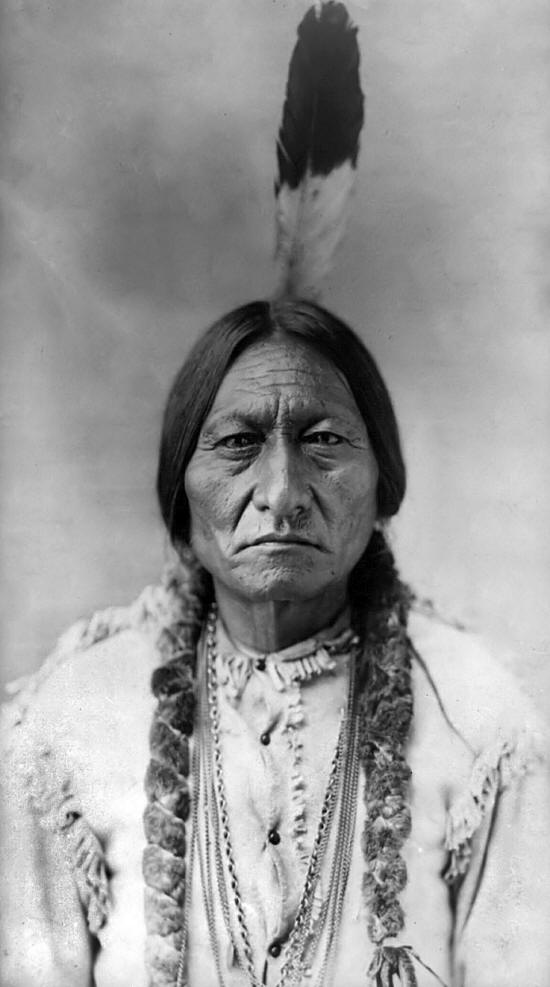
Sitting Bull- He was a medicine man and chief of the Sioux. He is most famous for his major victory at the Battle of Little Bighorn. Today, he is one of the most famous Native Americans ever.
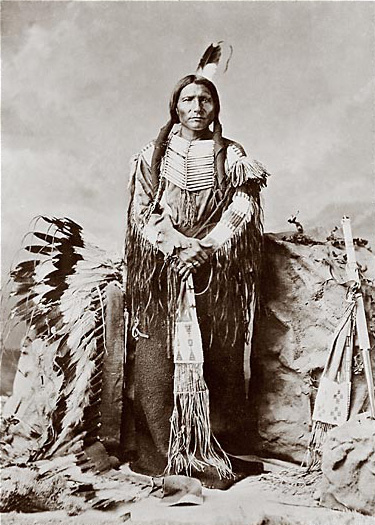
Crazy Horse- He was one of the main battle leaders and chiefs during the Sioux attacks during the Battle of Little Bighorn. He was also one of the main antagonists of the U.S. Army during Sioux war of 1876-1877.

The Cherokee tribe is originally from the Great Lakes region of the United States, but eventually settled closer to the east coast. The tribe came from Iroquoian descent. In 1928, gold was discovered on their land and they were forced to leave. From this they began a journey in which many lives were lost that is known as the "Trail of Tears." Today, Cherokee take great pride in their heritage.
Carrie Busyhead- She was a Trail of Tears survivor and became a prominent Indian Territory educator.
Charles Hicks- He was the Vice Chief on the Trail of Tears and Principal Chief briefly in 1927. He was one of the most influential leaders in the Nation at one point in time.
Sioux
The Sioux came to the United States from Asia. The name "Sioux" was given to them by the Chippewa and means "little snake." The Sioux tribe stand out because of their long, black, and straight hair. They were a nomadic tribe meaning they moved around a lot, typically following the path of the buffalo. Today, there are around 30,000 Sioux living in South Dakota and many more living in Nebraska, Montana, and Canada.
Subscribe to:
Comments (Atom)